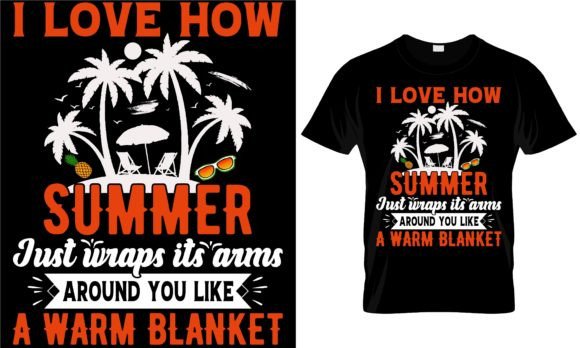
I Love How Summer Just... Design Review
As a professional embroidery digitizer and product reviewer, I approach every new graphic with a specific question: will this actually stitch out well on fabric? When evaluating the I Love How Summer Just... T-Shirt Design, my first impression is that it captures a relaxed, nostalgic mood perfectly suited for seasonal merchandise. The typography suggests a playful, hand-lettered aesthetic that feels organic rather than rigid. For an Etsy seller or small shop product creator, this vibe is essential because customers are buying a feeling of summer ease, not just a garment. However, translating a print-ready sublimation graphic into a successful machine embroidery design requires careful consideration of stitch structure and fabric interaction.
Real-World Application: The Custom Tote Bag Test
To truly understand the viability of this artwork, I mentally placed it in a real-life production scenario. Imagine preparing a custom embroidered tote bag for a beach boutique or a personalized gift for a bridesmaid. Canvas totes are popular, but they present unique challenges due to their coarse weave and lack of stretch. The I Love How Summer Just... T-Shirt Design appears to have enough visual weight to hold its own against the textured background of natural canvas, provided the digitizing accounts for push-and-pull distortion.
In this scenario, the design serves as more than just decoration; it acts as a branding anchor. If I were stitching this for a client, I would focus on how the lettering interacts with the bag's seams. A centered placement works best here. The whimsical nature of the phrase invites conversation, making it an excellent choice for commercial embroidery projects where buyer engagement is the goal. Unlike generic clip art, this specific layout has a personality that translates well to handmade products, signaling to the customer that thought was put into the curation of the summer collection.
Translating Graphics to Stitch Logic
While the product description highlights this as a premium sublimation and print-ready asset, embroiderers must evaluate it through a different lens. Sublimation designs often rely on gradients and fine lines that do not exist in thread. When adapting the I Love How Summer Just... T-Shirt Design for needle and thread, you must determine if the font style lends itself to satin stitch columns or fill stitch textures.
- Satin Stitch Suitability: If the lettering is bold and rounded, it is ideal for satin stitches, which provide that classic, raised embroidery look. However, verify the column width does not exceed your machine’s maximum jump stitch limit to prevent looping.
- Fill Stitch Considerations: If the design features distressed or vintage textures common in summer graphics, a standard fill stitch may look too flat. You may need to adjust the stitch density or use a textured fill pattern to mimic the original artistic intent without creating a bulletproof patch of thread.
- Running Stitch Accents: Delicate flourishes or underlines in the design should be evaluated for stability. On stretchy fabrics like t-shirts, thin running stitches can disappear or cause tunneling if not properly stabilized.
For apparel decorators, understanding these distinctions ensures the final embroidered patch or direct-to-garment stitch-out retains the charm of the original digital file while being durable enough for wear.
Fabric Compatibility and Stabilization Strategy
The versatility of T-Shirt Designs often leads makers to assume they work equally well on all substrates. In my experience, the I Love How Summer Just... T-Shirt Design will perform differently across various materials. On lightweight summer tees, the primary concern is stabilization. Because the phrase likely involves multiple text elements, using a cut-away stabilizer is non-negotiable to prevent the fabric from puckering around the letters. Hoop size selection is also critical; always choose the smallest hoop that comfortably fits the design to maintain tension, but ensure there is adequate margin to avoid distorting the lettering near the edges.
Conversely, if you are applying this to darker fabrics or items like caps, contrast becomes king. A design optimized for white sublimation paper may lack definition when stitched in white thread on a navy sweatshirt. Always test thread colors against your specific fabric before committing to a full production run. For baby embroidery or nursery decor, softness is paramount. High-density fills can create abrasive surfaces. In these cases, modifying the design to reduce stitch count or using softer threads like rayon or cotton can make the finished product safe and comfortable for sensitive skin.
Commercial Viability for Makers and Sellers
For creative entrepreneurs and craft business owners, time is money. The I Love How Summer Just... T-Shirt Design offers strong commercial potential because of its broad appeal. It fits seamlessly into categories ranging from vacation wear to teacher appreciation gifts. However, professionalism dictates that you verify licensing terms before selling. While the store describes it as premium, you must confirm whether the license covers physical finished products, digital embroidery files, or both. Never assume; protecting your business means respecting intellectual property.
Furthermore, presentation matters. When listing this design in your shop, use high-quality printable mockups or actual stitch-out photos. Customers trust sellers who show real results over digital renders. Seeing the design on a wrinkled linen shirt or a textured towel helps buyers visualize the scale and texture, reducing returns and increasing satisfaction. This level of transparency builds brand consistency and establishes you as a reliable source for quality design assets.
Essential Pre-Stitch Checklist for Embroiderers
Before loading the embroidery file into your machine, run through this practical checklist to ensure success. These steps apply whether you are making a single personalized gift or a batch of custom apparel for a local event.
- Test on Scrap Fabric: Never stitch directly onto a final product without testing. Use a scrap of the exact same material and stabilizer combination to check for registration issues or tension problems.
- Verify Hoop Size: Confirm the design dimensions fit within your machine’s usable area. Remember that the stated size often excludes the hoop’s gripping mechanism.
- Check Small Details: Inspect tiny serifs or punctuation marks. If they are smaller than 4mm, they may need to be enlarged or converted to a simpler stitch type to prevent needle breaks or thread nests.
- Evaluate Color Contrast: View the design in black and white mode in your software. If the details vanish without color, the design relies too heavily on hue rather than structure, which can be risky for tone-on-tone embroidery.
- Review Stabilizer Choice: Match the stabilizer weight to the fabric and stitch density. Heavy designs on light fabric require heavier support; light designs on heavy fabric need less.
- Confirm Licensing: Re-read the terms of use specifically for commercial application to ensure your intended sale method is permitted.
Final Thoughts on Design Integrity
The I Love How Summer Just... T-Shirt Design represents a charming addition to any summer catalog, but its success in embroidery depends entirely on execution. As makers, we bridge the gap between digital art and tactile reality. By respecting the limitations of thread, choosing appropriate substrates, and validating our assumptions through testing, we transform a simple graphic into a cherished embroidery project. Whether you are creating holiday embroidery for early shoppers or stocking up on beachwear inventory, let practical judgment guide your creative decisions. The result will be a product that not only looks beautiful on screen but feels substantial and professional in the hands of your customers.